
BS EN 1177 Play Bark Buying Guide for School Playgrounds

Back-To-School playground refresh: a practical buying guide for BS EN 1177 play bark
A fresh, safe play surface makes the start of term feel organised and welcoming. Late summer is the ideal window to plan, order, and install BS EN 1177 play bark so your playground is tidy and ready for autumn weather.
This guide gives schools, nurseries, and parish councils a straightforward plan. Use it to scope your areas, choose between play bark and woodchip, calculate volumes with confidence, arrange 2 to 5 day delivery, and schedule installation. You will also find a simple maintenance routine for the school year, accessibility notes, and ways to stretch budget with bulk bags and loose loads over 20 m³.
What BS EN 1177 means for schools
BS EN 1177 is the British and European standard that sets test methods and performance requirements for impact-absorbing playground surfacing. In practice, choosing play-grade bark tested to BS EN 1177 gives you confidence that the material has been assessed for shock absorption at specified depths and can support safer play under equipment such as swings, slides, and climbing frames. It does not replace a site risk assessment, but it provides a recognised benchmark for loose-fill surfacing across private, public and education settings.
Play bark vs woodchip: which is best for your play area
Both products can be useful in outdoor areas. The right choice usually comes down to intended use, movement, and maintenance:
-
Play bark chippings have a mixed particle size that knits together well, cushions falls, and offers good drainage.
-
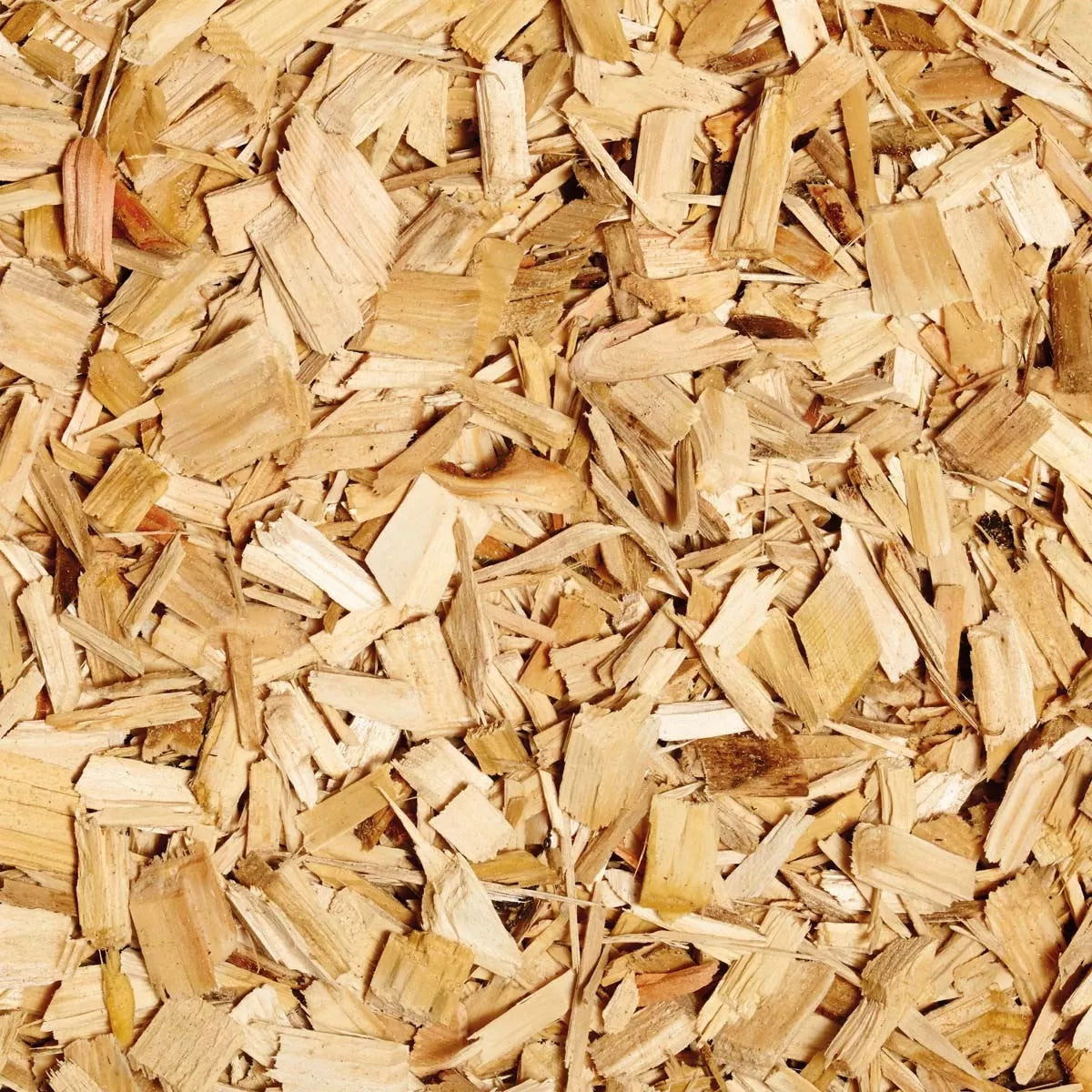
Woodchip can be a practical option for general outdoor surfacing, paths, and landscaped areas where a natural finish is wanted.
For play zones around equipment, always check that the product is suitable for the intended use and follow your risk assessment. For broader site improvements, woodchip may suit lower-impact areas where appearance, coverage, and straightforward installation matter.
If you are evaluating surface options more widely, see our guidance on child-friendly play surfaces for context and planning ideas. You can read more in our play surfaces overview at Bark UK Online.
Step 1: scope the play zones
Walk the site and sketch each area. Note:
-
Length and width of every zone, including fall zones around equipment.
-
Desired finished depth of loose fill after settlement.
-
Edging type and any containment features that help keep bark in place.
-
Access for pallets or loose loads and wheelbarrow routes for spreading.
Measure to the internal edge of any timber or rubber edging. Where fall heights are higher, plan for deeper loose fill, following your risk assessment and the supplier’s guidance.
Step 2: pick a target depth and plan for settlement
Loose-fill surfaces settle. For most school and nursery sites, a working guide is to allow up to 20 percent settlement. If you want a maintained surface of 300 mm, you might install 350 to 360 mm initially, then top up after bedding in. Use consistent depth across the zone so inspections are easier.
Step 3: calculate volumes and convert to bulk bags
A quick estimate method:
-
Convert area to square metres.
-
Multiply by target install depth in metres to get cubic metres (m³).
-
Add up to 20 percent for settlement and future raking losses if you want fewer mid-year top ups.
Example: A 10 m by 6 m zone at 0.35 m depth is 10 x 6 x 0.35 = 21 m³. With a 10 percent buffer, order about 23 m³.
Bulk bags are typically around 1,000 L, which is 1.0 m³. So in this example you would look at 23 bulk bags, or consider a loose load if you are over 20 m³ to reduce handling and unit cost.
For a more detailed approach and a calculator walkthrough, see our guide on how much bark you need.
How much will a bulk bag cover
As a rule of thumb, 1 bulk bag at 1.0 m³ covers:
-
About 3.3 m² at 300 mm
-
About 2.5 m² at 400 mm
These figures are install depths, not the compacted depth after settlement. Adjust for your chosen depth and any buffer you build in.
Step 4: plan ordering and 2 to 5 day delivery
Schools and councils often work to fixed windows. Bark UK Online offers delivery to 95 percent of UK postcodes in 2 to 5 working days, with charges shown at checkout. To keep the project on track:
-
Book delivery for early in your installation week so weather or staffing changes do not push you into term time.
-
Confirm access for an 18 tonne vehicle, kerbside offload, and safe pallet placement near the site.
-
If ordering over 20 m³, ask about loose loads to reduce pallet handling and improve efficiency on larger playfields.
You can order BS EN 1177 play bark online. Explore options in our playground bark range and choose bulk bags or loose loads to match your plan.
Step 5: schedule installation
Aim for a dry forecast. Prepare edges and weed membranes, then spread in lifts so depth is even. Rake level, paying attention to high-wear spots under swings and slide exits. If staffing is limited, consider a phased approach that completes fall zones first, then general areas. Keep one unopened bulk bag back as a contingency for final touches.
Accessibility and inclusion notes
Loose-fill surfacing has limits for wheelchair and pram mobility. Good practice includes:
-
Firm, flush edging and frequent raking to minimise ruts.
-
Solid path routes to equipment and seating areas so users can approach without crossing deep loose fill.
-
Lower depth or a bound path interface at entrances to reduce wheels sinking.
-
Clear, well-maintained transition zones between hard paths and bark.
Where year-round wheeled access is essential to large areas, consider combining bark zones with firm routes to and around equipment.
Maintenance through the school year
A light, regular routine keeps the surface safe and tidy:
-
Weekly: quick rake to level, pull material back into high-wear spots, and remove litter or foreign objects.
-
Half-termly: depth spot checks under equipment and along edges, top up if settled below your target minimum.
-
Termly: decompaction by raking through deeper layers in busy zones and checking edging integrity and weed membrane exposure.
-
Autumn and spring: add a top up to restore design depth before wetter or busier periods.
With attentive care, playground bark often lasts several seasons, with top ups as usage and weather dictate.
Budget stretchers for late summer procurement
-
Choose bulk bags for straightforward handling and minimal mess. For larger installations over 20 m³, loose loads can reduce cost per cubic metre and speed spreading.
-
Consolidate deliveries across multiple zones in one order window to streamline drop scheduling.
-
Match the material to the area, using play bark in impact zones and woodchip in more general landscape or path areas where appropriate.
-
Keep a small reserve on site for fast fixes after inspections without waiting for a new delivery.
If you also have paths or landscaped borders to refresh while the team is on site, you can combine lines on one order. See our bark mulch range for beds and borders, and hardwood chips for routes that must stay firm underfoot.
Quick FAQ
-
What bark is best for a play area? Choose play-grade bark tested to BS EN 1177 for play zones that need impact-absorbing surfacing. Always check the product is suitable for the intended use and install it to guidance and your risk assessment.
-
What is the difference between play bark and woodchip? Play bark is generally selected for play surfacing because it is designed for that setting, while woodchip is often used for general outdoor covering, paths, and landscaped areas. The best choice depends on where the material will be used.
-
What does BS EN 1177 mean for schools? It is the standard for impact-absorbing playground surfaces. It indicates the product has been tested for shock absorption at specified depths, supporting safer play when installed to guidance and your risk assessment.
-
How much does a bulk bag cover? A 1.0 m³ bulk bag covers roughly 3.3 m² at 300 mm or 2.5 m² at 400 mm. Adjust for your chosen install depth and settlement allowance.
-
What is the easiest way to estimate how many bulk bags we need? Multiply area (m²) by install depth (m) to get m³, then round up to whole bulk bags. Add up to 20 percent for settlement and raking losses. For help, use our step by step calculator guide.
-
How long does playground bark last before topping up? With weekly raking and termly checks, most sites top up high-wear zones once or twice a year, then schedule a broader refresh annually or biannually depending on traffic and weather.
Summary and next step
A safe, tidy surface is achievable on a tight late summer timeline. Scope your zones carefully, choose BS EN 1177 play bark for impact areas and woodchip where a general loose-fill surface is more suitable, calculate volumes with a small buffer, book 2 to 5 day delivery, and schedule a simple maintenance routine. For product advice, quantity checks, and delivery planning, you can explore playground bark options at Bark UK Online or contact the team to discuss bulk bags and loose loads over 20 m³.


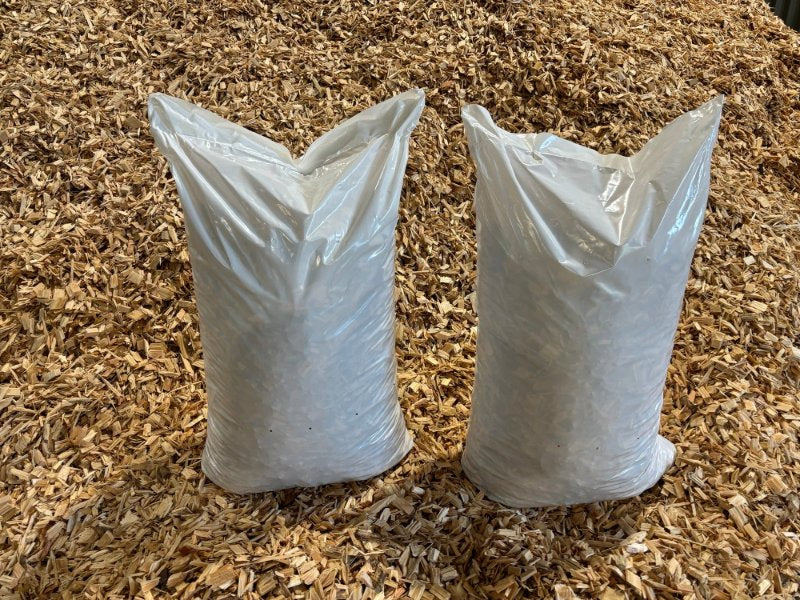
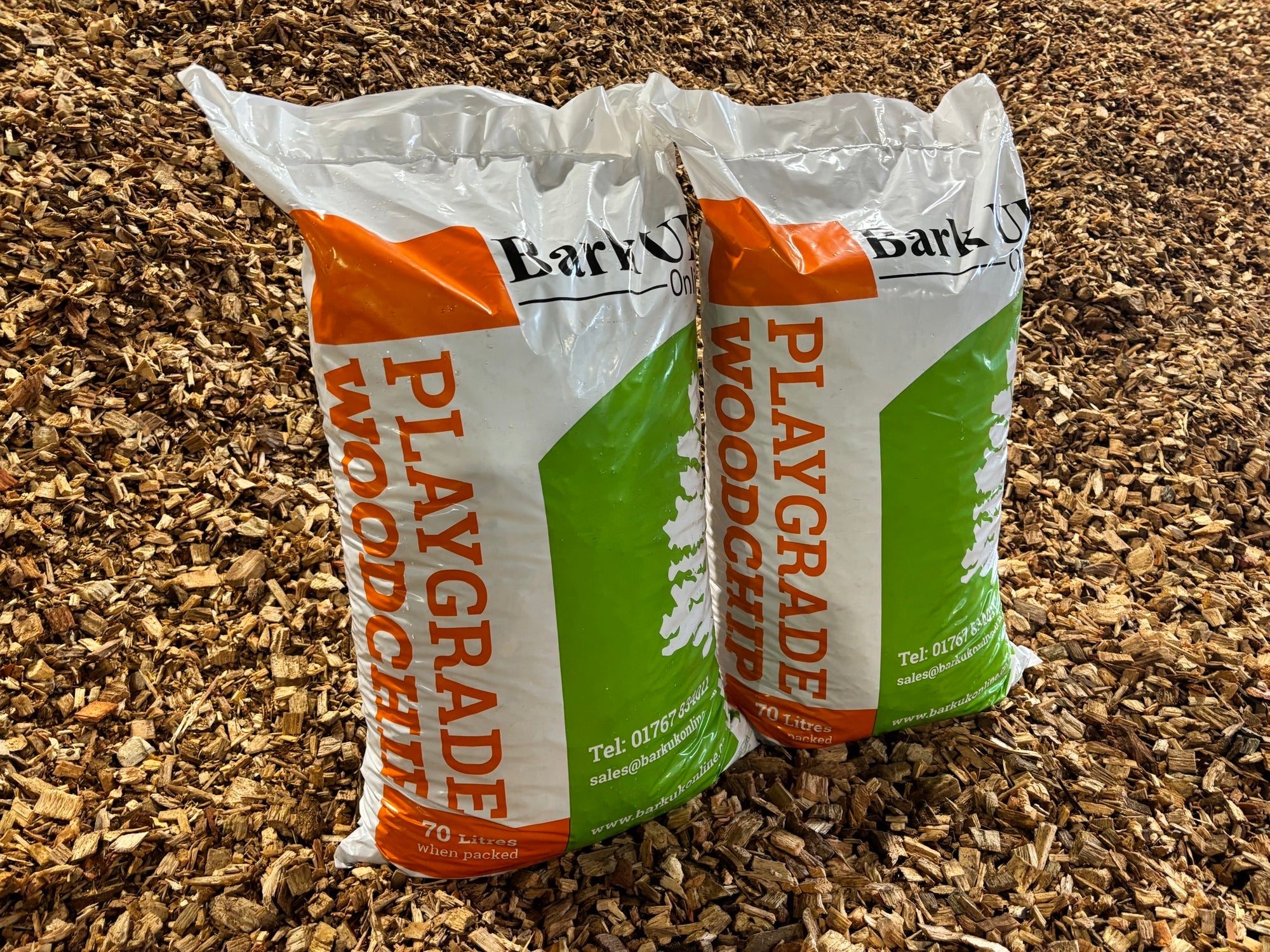
Supplied in easy to handle 70L bag
Minimum 80% Hard wood chips comp...

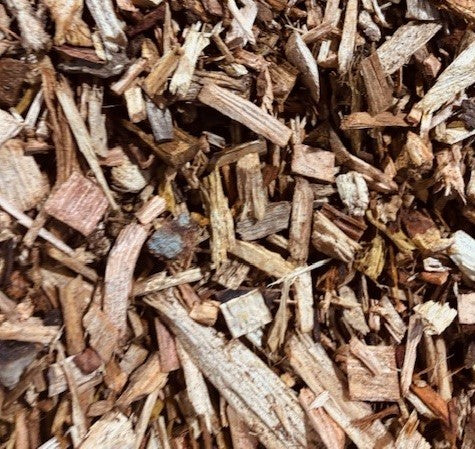
Minimum 80% Hard wood chips comprises of Ash, Beech, Birch, Oak, Sycamore ...
Minimum 80% Hard wood chips comprises of Ash, Beech, Birch, Oak, Sycamore ...
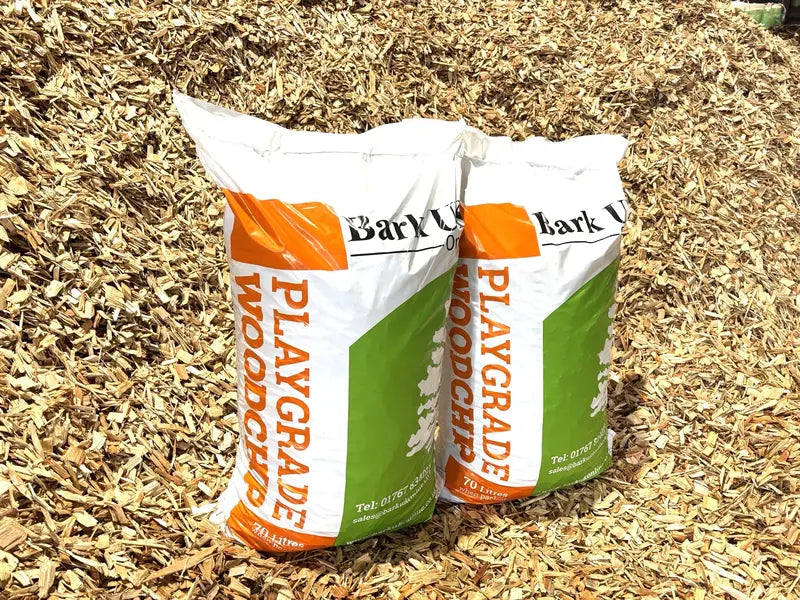
Softwood chips are supplied in easy to manage 70 litre
Softwood c...
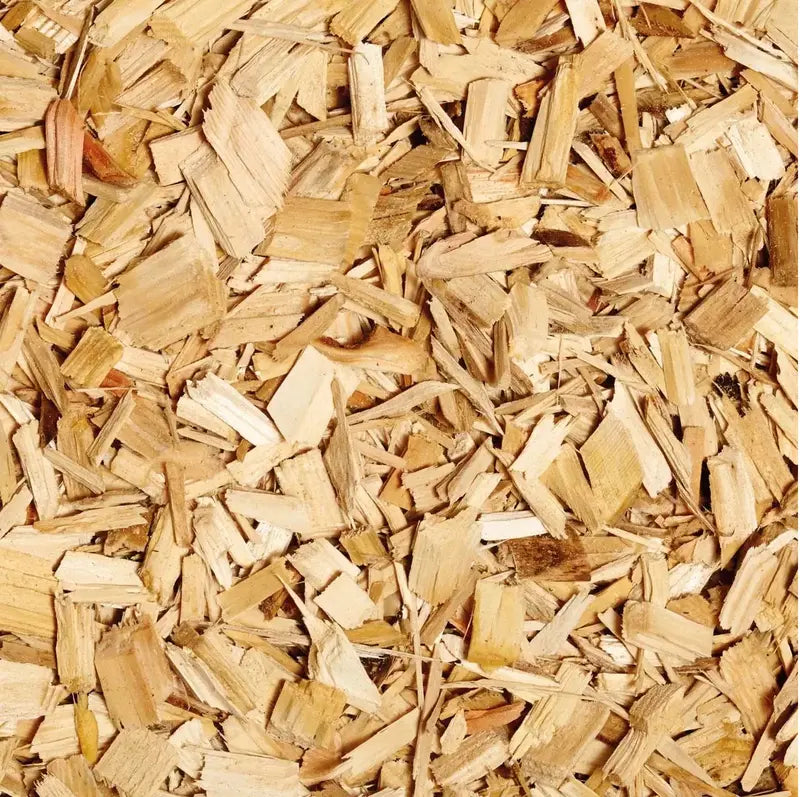
Softwood chips are supplied in large Approx.1000 litre bulk bags
Softwood chips are supplied in large Approx. 2000 litre bulk bags
Wood chips are supplied in easy to manage 70 litre bags
<...
Supplied in large Approx.1000 litre bulk bags.
Wood ch...
Wood chips are supplied in large Approx.2000 litre bulk bags....
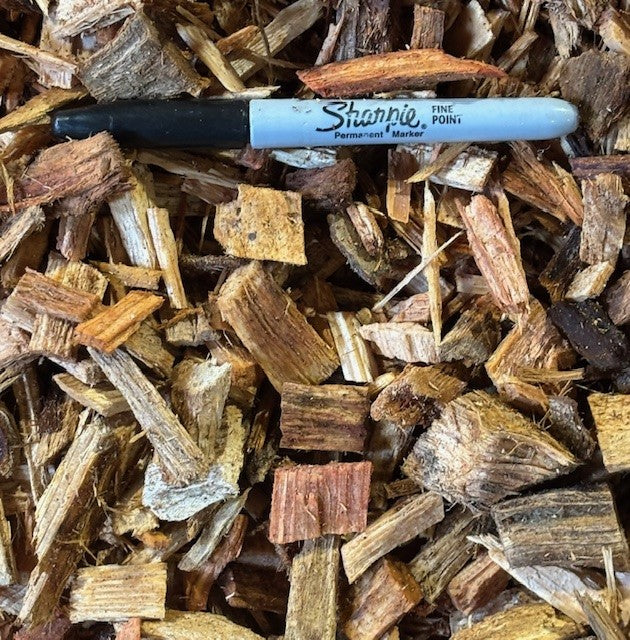
Budget Poultry run wood chips make an ideal floor covering for your chicke...
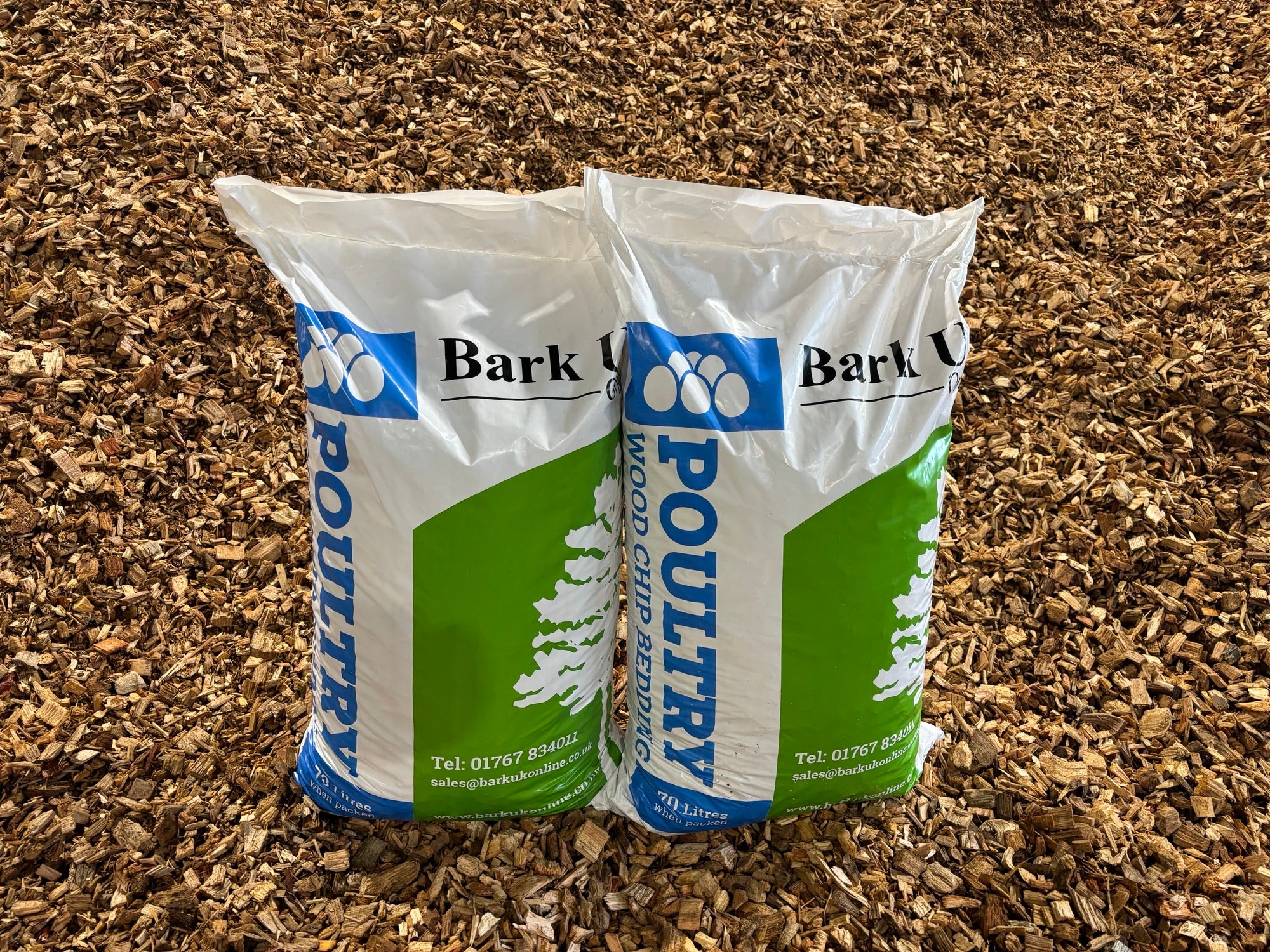
Poultry wood chips make an ideal floor covering for your chicken run...
Budget Poultry wood chips make an ideal floor covering for your chic...
Budget Poultry run wood chips make an ideal floor covering for your chicke...
Poultry Softwood chips are supplied in easy to manage 70 litre bags.
...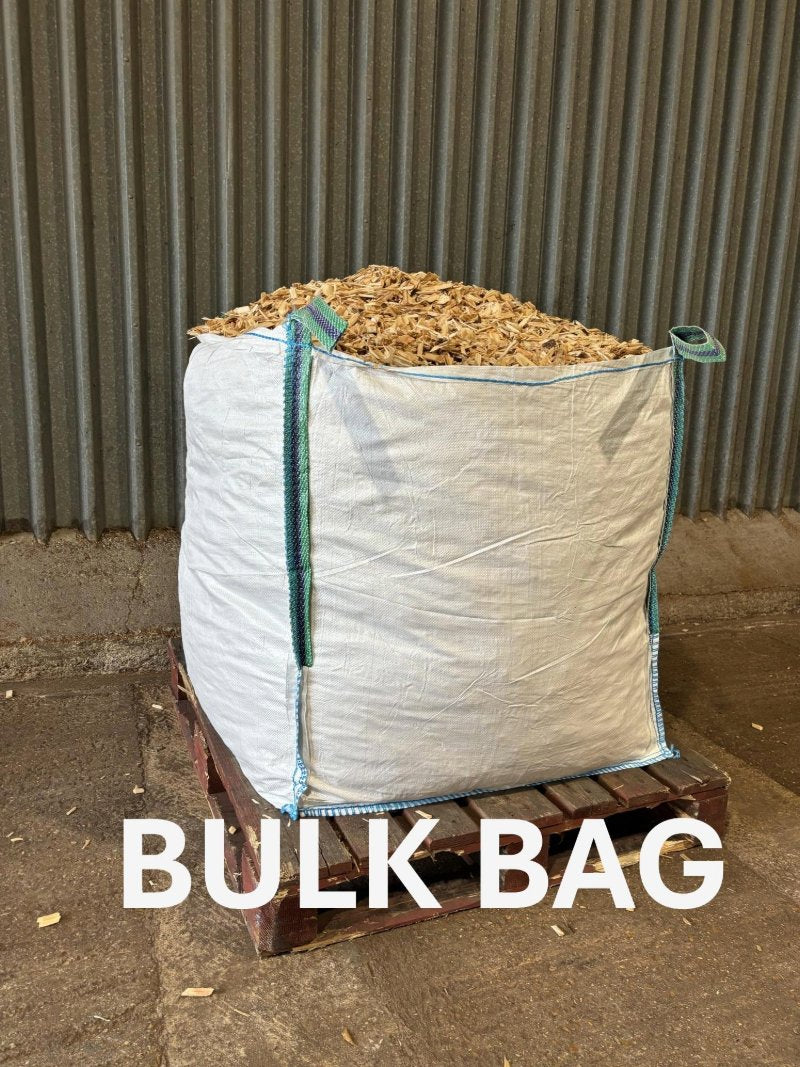
Poultry Softwood chips are supplied in large Approx.1000 litre bulk ...
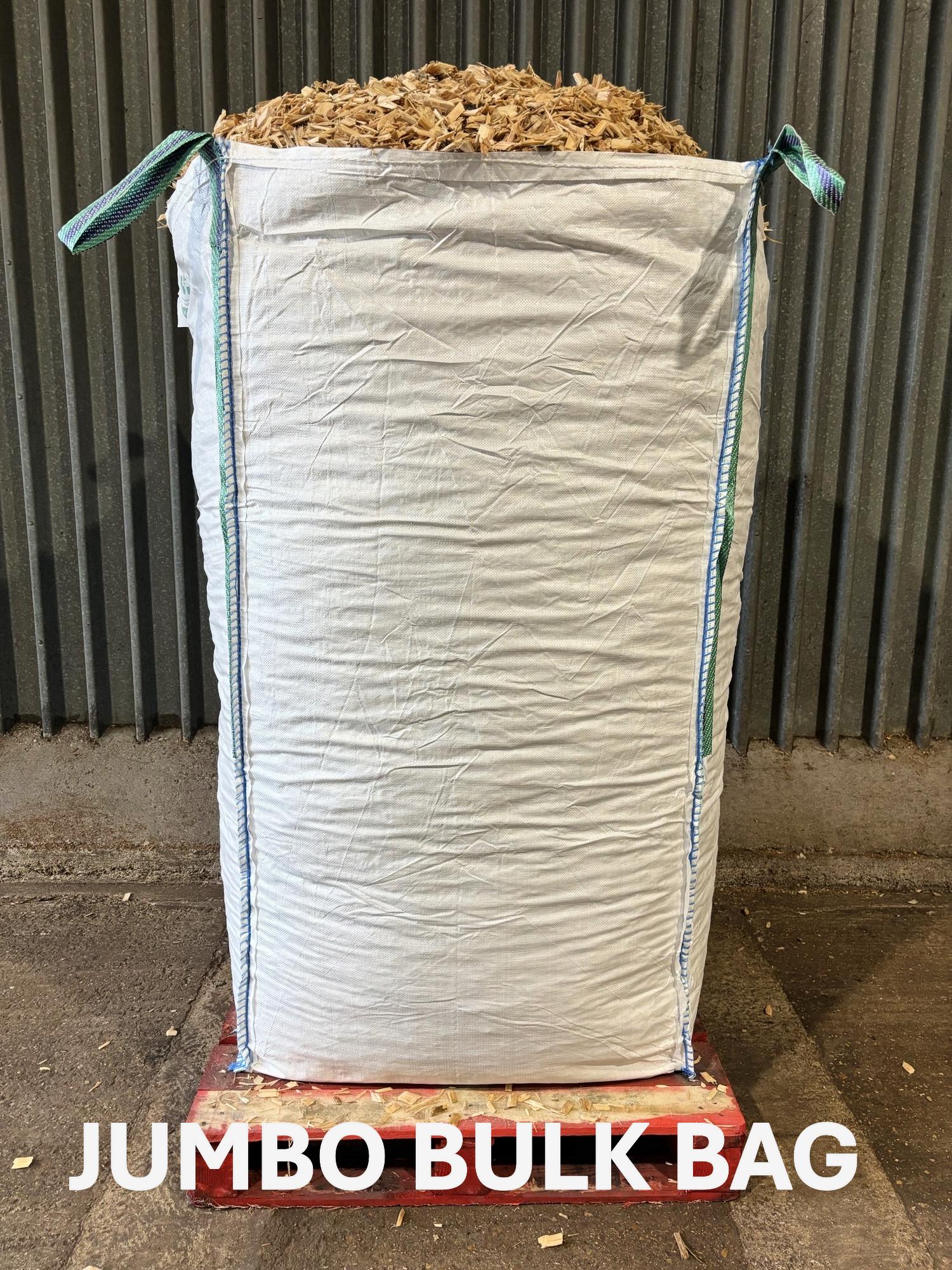
Poultry Softwood chips are supplied in large Approx.2000 litre bulk ...
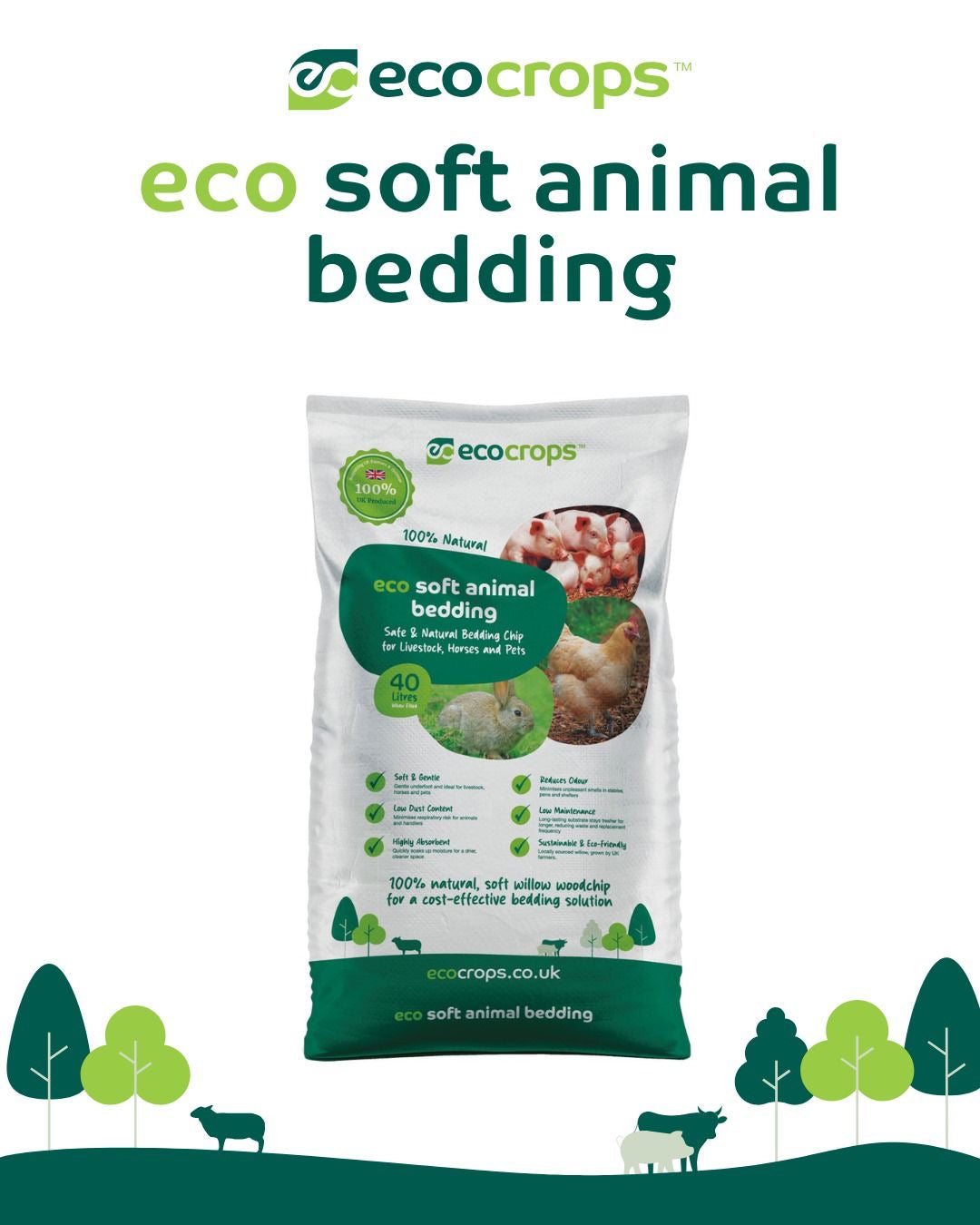
Eco Crops’ natural bedding solution is soft and are supplied in...